Invited Speakers
Workshop in Ancient Philosophy - MT 2026
4-6 pm, Ryle Room (20.339), Schwarzman Centre
Ian Campbell (Heidelberg University): 'Aristotle's Defense of the Excluded Middle'
Abstract: I offer a new interpretation of Aristotle’s first argument in defense of the principle of the excluded middle (PEM) in Metaphysics Γ.7 (1011b23–29). Scholars have typically treated the passage as an attempt to derive PEM based on Aristotle’s canonical definitions of truth and falsity. Against this reading, I argue that this argument conforms to the strategy of an ‘elenctic demonstration.’ Its aim is not to establish PEM, but to show the impossibility of meaningfully denying it. On this interpretation, Aristotle maintains that any denial of PEM would have to take the form of a statement with determinate meaning. Yet such a statement already presupposes accounts of truth and falsity that entail an instance of PEM. Conversely, if one attempts to avoid these commitments in order to deny PEM consistently, one thereby refrains from meaningful assertion and fails to engage in a meaningful discussion. The result is a dilemma: either one asserts something meaningful and thereby presupposes PEM, or one avoids this presupposition but thereby fails meaningfully to deny it.
Chair: Ed Lamb
4-6 pm, Ryle Room (20.339), Schwarzman Centre
Alex Long (University of St Andrews) : 'Platonic protreptic and the unity of the Phaedrus'
Abstract: Plato’s Phaedrus is widely regarded as the first expression in the Greek and Roman traditions of the view that literary compositions should possess organic unity. But it is an apparently disjointed work, and the question of its own unity is a long-standing puzzle. The paper argues that there is a function shared by each part of the dialogue: illustrating and defending an indirect approach to protreptic, where the protreptic is left unannounced and exploits the other person’s pre-existing interests. The dialogue thus defends the distinctive approach to protreptic taken in Plato’s dialogues more generally.
Chair: Ibrahim Safri
4-6 pm, Ryle Room (20.339), Schwarzman Centre
Michele Pecorari (University of Oxford): 'Why do sceptics have beliefs?'
Abstract: At Outlines of Pyrrhonism (PH) 1.13 Sextus Empiricus distinguishes two understandings of ‘belief’ (dogma) and claims that it is only on one of them that the Pyrrhonian sceptic has no beliefs: on the other, wider one, it turns out, they do have beliefs. The exact nature of the sceptic’s beliefs is unclear, and open to debate. For instance, does the sceptic believe that the world is in such and such a way, or rather that it appears to them in such and such a way? Do the sceptic’s beliefs deserve to be called ‘beliefs’ at all? Are they truly compatible with the sceptic’s suspending judgement on everything? In this talk, I try to provide a fresh perspective on this set of questions by piecing together the story and the philosophical motivations which lie behind Sextus’ distinction at PH 1.13. First, I lay out some general features of Sextus’ account of sceptical philosophy in PH 1. Then, I trace the development of this distinction in the Pyrrhonist tradition between Aenesidemus and Sextus. Finally, I examine the way Sextus employs this distinction in PH and flesh out some implications which this might have for our interpretation of the sceptic’s beliefs.
Chair: Martina Buston
4-6 pm, Ryle Room (20.339), Schwarzman Centre
Carlotta Cappucino (University of Bologna): '“A Strange Dream”, “A Strange Image”: The Philosophical Function of Atopia in the Platonic Corpus'
Abstract: The adjective atopos, from which atopia is derived, is formed by the privative alpha and topos (“place”). From its earliest attestations, the privative force of the prefix oscillates between “without a place” and “out of place,” while its semantic range extends from the unexpected and exceptional to the bizarre (paradoxos) and the absurd (alogos), with an apparent predominance of negative connotations. In all cases, the adjective indicates that the thing of which it is predicated escapes our ordinary conceptual categories; its most common translation is therefore “strange.”
In Plato, the adjective occurs 121 times, whereas the noun—far less common in general—appears only five times. As has been noted, atopia, understood as “singularity,” is the distinctive trait of the Platonic Socrates (a trait absent from Aristophanes and Xenophon): Socrates is singular in the sense that he is comparable to no human being, whether past or present (cf. Symp. 221c–d); he is, in other words, a unicum. While the studies devoted to Socrates as atopos are very few, there is, to my knowledge, no broader investigation of Plato’s use of this semantic field beyond the figure of Socrates. The aim of my research is therefore to fill this gap.
I would like to begin with a particularly striking case: the reading of two parallel passages in which the same dialogical pattern seems to recur. In both, Socrates describes an image, and his interlocutor responds by calling it atopon. The two passages are well known: the dream recounted in the proem of the Crito (a dream-image) and the underground Cave that opens Book VII of the Republic (an allegorical image). I shall argue that these two images constitute exemplary instances of the philosophical function that Plato assigns to atopia—in a technical sense of the term—transforming it into an effective device of his dialogical writing.
Chair: Michele Pecorari
4-6 pm, Ryle Room (20.339), Schwarzman Centre
Arianna Piazzalunga (University of Geneva / KU Leuven): 'Was Aristotle impious? Plato, Aristotle and the early Academy on soul, motion and teleology '
Abstract: This paper discusses a possible debate between Plato and the early Academy, on the one hand, and Aristotle, on the other, concerning the cause of heavenly motion. It also suggests that Aristotle may be among the polemical targets of Plato’s Laws 10 and the Epinomis, particularly in their claim that any theory that neglects the causal priority of the soul over the body is bound to atheism.
Chair: TBA


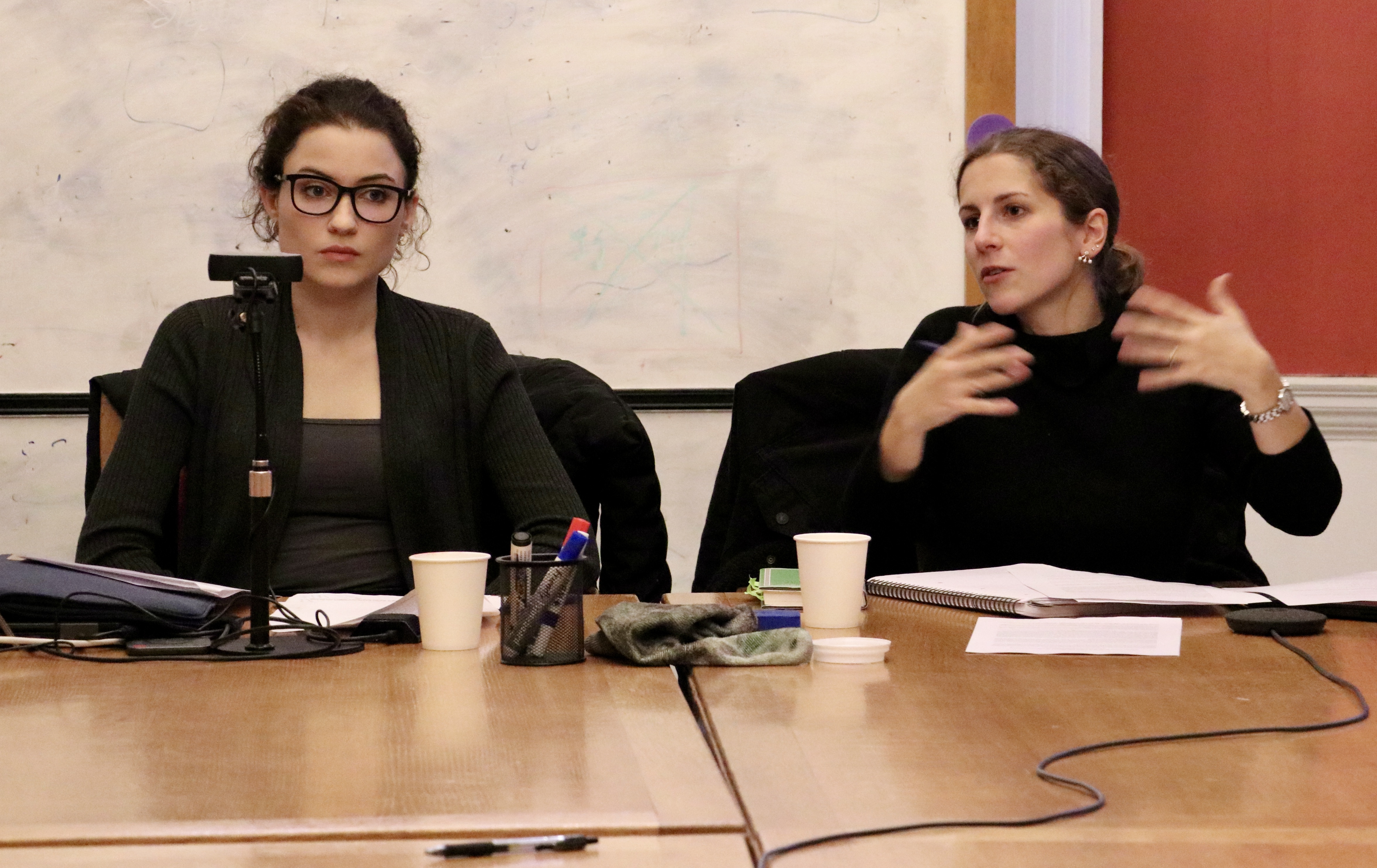

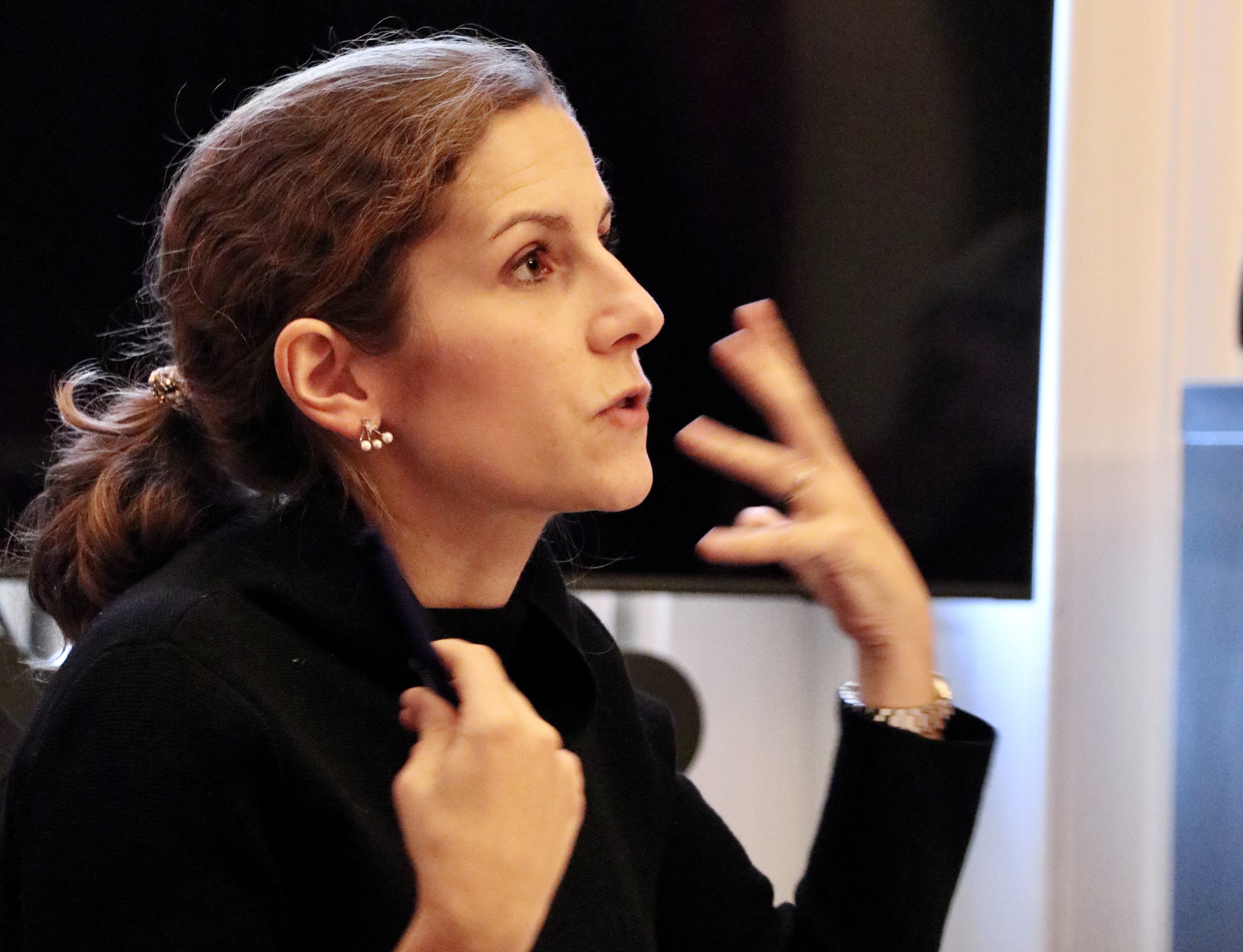


- This is a speaker series devoted to discussing work in progress by speakers within and outside Oxford pertaining to the field
- Seminars take place on Thursdays at 4pm-6pm, in the Schwarzman Centre, Ryle Room (20.339)
- Convenors: Prof. Ursula Coope, Prof. Marion Durand, Prof. Alexander Bown
- Members of the Faculty, students, and visitors are welcome
- If you would like to go out to dinner with the speaker, then please contact the chair of the meeting before Tuesday of that week
Interdisciplinary Research Seminar in the Study of Religions MT 2026
Time: 4:00-5:30pm
Location: Room 30.026, Schwarzman Centre
Prof Jea Sophia Oh (West Chester University of Pennsylvania): “Shakti and Salim: An Ecofeminist Thealogy of Life-Power through Kali and Baridegi”
Time: 4:00-5:30pm
Location: Olga Pocock Room, LMH
Dr Ibrahim Safri (Walter Benjamin Fellow, Faculty of Philosophy, Oxford): “Islamic Philosophy in North Africa during the Early Modern Period (15th–18th Centuries)”
Time: 4:00-5:30pm
Location: Olga Pocock Room, LMH
Prof Justin Jones (Faculty of Theology and Religion, Oxford): “Women-led ‘Islamic Courts’ in India: Women’s Rights Between Shariʿah and State”
Time: 4:00-5:30pm
Location: Olga Pocock Room, LMH
Dr Rose Stair (JRF, Faculty of Theology and Religion, Oxford): “Religion and Culture in Early Zionist Thought: The jungjüdisch Case”
Recurring Speaker Series
Workshop in Ancient Philosophy
John Ackrill Memorial Lecture